

The hurricane passed three weeks ago. The water that came through the roof has receded. The visible damage looks contained. And then the smell starts — that particular musty note that has nothing to do with the storm-era dampness and everything to do with what is happening inside walls, attics, and crawl spaces. Hurricane mold in Northeast Florida is not a possibility; it is a near-certainty when storm water sits more than 48 hours, and homes that look fine at the three-week mark often turn out to have significant colonization by day 30. The post-storm timeline matters because the response window is narrow.
This post walks through what hurricane mold looks like as it develops, why the 30-day mark is a common discovery point, and what NE Florida homeowners should be watching for in the weeks after any major storm.
Under typical Florida post-storm conditions — warm temperatures, high humidity, and often power outages disabling A/C — mold begins growing within 24 to 48 hours of materials becoming wet. Visible colonies typically appear within 7-14 days. The 30-day mark is when many homeowners first notice the problem because that is when mold has spread far enough to produce noticeable odors and visible spotting in living areas. By this stage, colonies have usually established in multiple parts of the home.
Understanding the timeline helps homeowners catch the problem before it spreads.
Within 24-48 hours of water exposure, mold spores that landed on wet materials begin germinating. EPA mold guidance identifies this window as the critical response window — before establishment. In Florida, this window typically closes fast because post-storm power outages disable A/C and dehumidification, ambient humidity stays above the 60% mold-activation threshold, and water trapped in walls, attics, and sub-floors has nowhere to go.
During this first week, the mold is almost entirely hidden. Spores are establishing in materials that look normal from the outside — wall cavities, insulation, attic decking, sub-flooring. Homeowners returning to the house typically see water damage but no mold yet.
By the second week, colonies are visible to anyone who looks. Mold appears on the underside of carpet pad pulled back from a wall, on the back side of removed drywall sections, on attic plywood, on the sub-floor under flooring that has been removed. The musty smell starts to develop. Homeowners doing their own cleanup work often discover this stage when they pull a baseboard off and find growth behind it.
By day 30, mold that established in hidden spaces has often spread to surfaces a homeowner can see — baseboards, lower wall sections, around plumbing penetrations, near HVAC vents. The smell is now noticeable throughout the affected portion of the home. Residents may experience allergy-like symptoms (congestion, headaches, eye irritation) that improve when they leave the house. CDC guidance specifically identifies this symptom pattern as a flag for indoor mold exposure.
Past the 30-day mark, colonies have established structural roots and the contamination scope has stabilized — meaning further spread slows but does not stop. Remediation gets more involved because more materials are affected and the moisture conditions that fed initial growth often persist.
The pattern repeats every hurricane season in Northeast Florida.
The first two weeks after a major storm involve intense activity — securing the property, dealing with insurance, organizing repairs. Homeowners are focused on visible structural damage and immediate safety. Subtle signs of developing mold (faint smell, slight discoloration) get missed because attention is elsewhere.
Contractors often start structural repairs — new drywall, new flooring, new insulation — before the underlying moisture is fully addressed. The new materials get installed over (or adjacent to) mold-infested cavities. Within weeks the mold spreads to the new materials and the homeowner is back to square one with additional cost.
Post-storm Florida humidity does not drop. NOAA records show Jacksonville summer indoor conditions averaging 75% relative humidity without active intervention. Homes with damaged HVAC, broken windows, or roof penetrations cannot maintain the dry-standard conditions needed to halt mold growth. The active spread continues even while the homeowner is focused on other recovery tasks.
The diagnostic signs that mold has established and is spreading.
A persistent musty odor — different from the wet/damp smell of fresh water damage — is the most reliable early indicator. The smell tends to be strongest near floor level and in poorly-ventilated areas (closets, bathrooms, lower rooms). It often gets worse when the HVAC cycles because air circulation moves microbial volatile organic compounds (MVOCs) through the home.
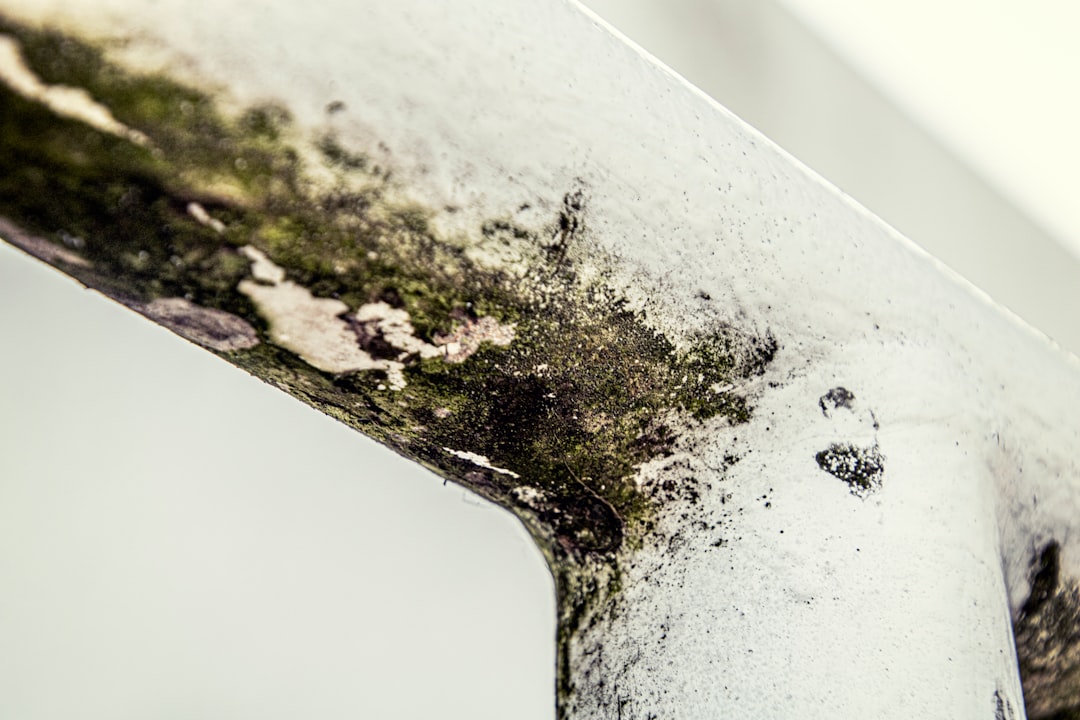
Dark spots on baseboards, lower wall sections, ceiling corners near former water entry points, and around plumbing fixtures. The spots may be black, brown, green, or gray depending on the species. (We covered species identification in our black mold post.)
Household members experiencing congestion, headaches, eye irritation, or fatigue that improves when they leave the house. CDC indoor air quality guidance identifies this pattern as a flag for environmental causes including mold exposure.
Cupping or buckling of hardwood floors, paint that starts to bubble or peel, drywall that feels soft to the touch in certain spots, insulation that has visible dark staining where the homeowner can see it. These changes typically appear after sustained moisture and indicate the substrate is supporting microbial activity.
The IICRC S520 standard for mold remediation applies, but post-storm conditions add complications.
Major storm events often affect entire homes rather than localized areas. The remediation scope is larger than a typical mold job, the containment is harder to maintain, and the moisture-source remediation involves multiple structural systems rather than a single leak.
After a major storm, regional restoration capacity is stretched. Equipment becomes scarce. Lead times for inspection and remediation extend. Homeowners who wait until they have unambiguous evidence of mold often discover that the response timeline pushes weeks further than they expected.
Post-storm mold remediation typically has to coordinate with structural repairs (roof, drywall, flooring), insurance documentation, and possibly content restoration. The work cannot proceed in isolation. This is why early identification matters — it allows the remediation to fit cleanly into the overall recovery sequence rather than disrupting work already underway.
If your home took on any water during the storm, the inspection should happen within the first 7-14 days — before colonies become established and spread. If the home seems unaffected, watch for the warning signs (smell, visible spotting, occupant symptoms) and arrange inspection at the first indication. Free or low-cost mold inspections are commonly available; the cost-benefit is strong even for moderate suspicion.
Coverage varies. Many Florida policies cap mold-specific coverage at $5,000-$10,000 regardless of the source. Mold from a sudden and covered water loss may be covered more comprehensively. Long-term seepage and gradual conditions are commonly excluded. Read your policy carefully and document the post-storm timeline thoroughly to support the claim.
You can spot the warning signs — smell, visible spotting, occupant symptoms, surface changes. You cannot reliably determine the scope without inspection because most contamination is hidden in walls, attics, and sub-flooring. EPA guidance recommends professional assessment for any suspected indoor mold beyond a small visible area.
This is common after major storms. Stop the work in any area that may be affected. Document what was installed and when. Arrange professional mold inspection. The remediation team can usually work around partial repairs, but you want to avoid sealing mold-infested cavities behind new finishes — that turns a remediation project into a demolition-and-rebuild project.
If the HVAC system is undamaged and the building envelope is intact, A/C helps by maintaining lower indoor humidity. If the HVAC system was compromised by the storm or the envelope has unrepaired water entry points, A/C may circulate spores throughout the home and accelerate spread. A professional inspection determines whether to run the system pending remediation.
Hurricane water damage in Florida produces mold reliably. The 30-day mark is when many homeowners first notice it, but by that point the colonization has typically been developing for weeks. Watching for early warning signs in weeks 2-3 and arranging professional inspection at the first indication is the difference between a contained remediation and a major reconstruction project.
Rainbow Restoration of Deerwood maintains post-storm response capacity across Southside, Atlantic Beach, and St. Augustine through hurricane season. Our mold remediation team works under IICRC S520, and we coordinate with the water damage restoration team when post-storm moisture sources need ongoing attention alongside the active mold work.
After the next major storm: watch for the smell, look at the baseboards, listen to the household. The 30-day mark is too late to start. The 7-day mark is the right time to look.