
The fire department’s job is to put the fire out — and to do that they use water. Sometimes a lot of water. In a typical residential structure fire response in Jacksonville, crews can deliver hundreds of gallons in a matter of minutes, and that water goes everywhere — soaking drywall, saturating insulation, pooling in lower-level rooms, running down through ceiling penetrations. The fire is out. The structure is safer. And the conditions for a mold problem have been established in the same hour.
This post walks through why fire damage and mold growth are so closely linked in Northeast Florida homes, how the standard fire restoration process needs to account for both issues, and what homeowners should expect in the days and weeks after a fire response.
Not always, but in Florida the conditions for mold growth follow nearly every significant fire response: suppression water saturates building materials, post-fire humidity stays elevated (NOAA records average 75% RH year-round), and disrupted A/C systems cannot maintain the under-60% indoor humidity EPA mold guidance recommends. Without prompt structural drying alongside the fire restoration, mold colonies establish within 24-48 hours and require IICRC S520 remediation in addition to S700 fire work.
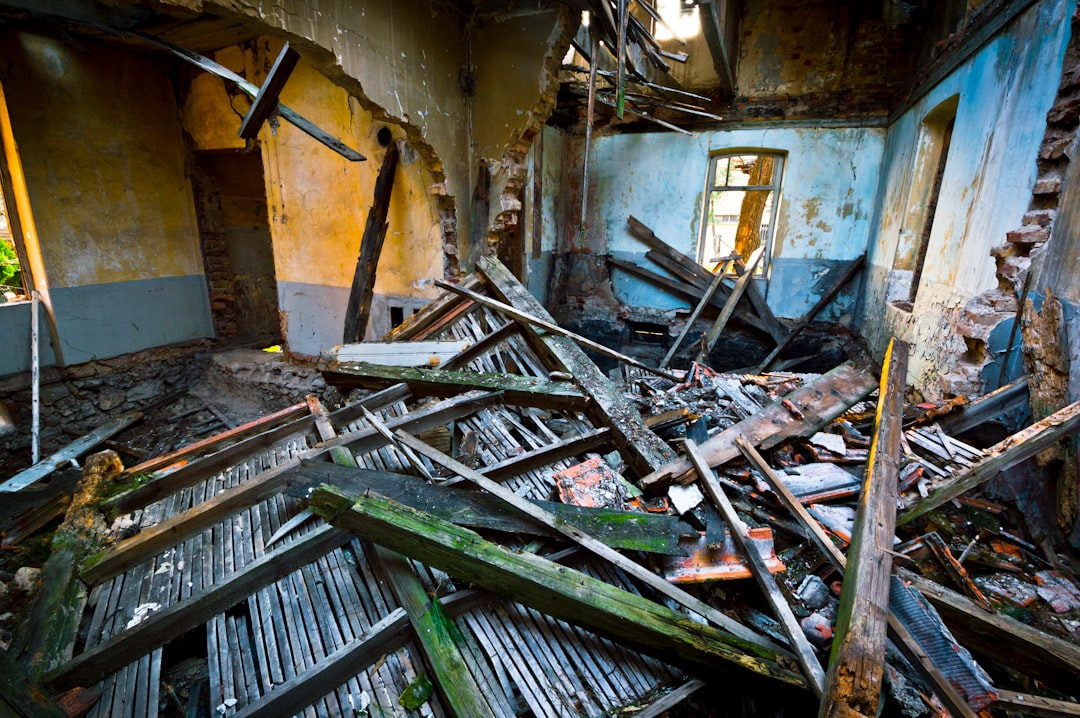
The water used to extinguish a fire is itself a major restoration consideration.
A standard fire engine line delivers 95-250 gallons per minute. A typical kitchen fire might require 100-300 gallons total. A structure fire involving multiple rooms can consume 1,000+ gallons before knockdown. All of that water enters the home — through windows, doors, the ceiling above the fire (when crews vent the roof), and the spaces under doors as it runs along floors. Within minutes of arrival, the fire department’s response has created a major water damage event on top of the fire.
Water sprayed at burning ceilings drips back down through structural openings, runs along floors to lower-level rooms, pools at exterior doorways, and saturates carpet, pad, drywall, and insulation. In Jacksonville two-story homes, water from a second-floor fire response typically reaches the first floor and sometimes the basement or crawl space. The Category of this water under IICRC S500 is typically 2 because it picks up contamination from burned materials, ash, and structural debris — and within 48-72 hours in Florida humidity it degrades toward Category 3.
The fire department’s job ends when the fire is out and the structure is safe. They do not have responsibility for drying. They typically leave a wet structure — sometimes pulling salvaged contents to lawns or driveways but rarely doing more than basic ventilation. That handoff is the homeowner’s problem from the moment the engines leave.
Why fire-to-mold transitions happen faster here than in other states.
Fire damage frequently compromises the HVAC system — either through direct fire/water damage to components, through smoke contamination of ducts (covered in our HVAC soot post), or through power disconnection during emergency response. Without functional HVAC, indoor humidity in a Jacksonville home with broken windows and a wet structure climbs into the 80s within hours. EPA mold guidance flags 60% sustained indoor humidity as the activation threshold — fire-damaged homes blow past that long before remediation begins.
The combination of suppression water and fire-byproduct contamination creates conditions where multiple mold species can thrive simultaneously. Wood framing, drywall, insulation, carpet pad — all common Florida residential materials — become aggressive substrates for colonization within 24-48 hours.
Post-fire interior temperatures stay in the warm range that supports microbial growth. The fire itself heated the structure; the surrounding hot Florida air keeps it warm; the disabled cooling system cannot reduce temperatures. The mold-friendly temperature band (60-90°F) sustains without interruption.
The two standards apply simultaneously when fire and water/mold damage overlap, which is most of the time in Florida.
Category of smoke residue (protein, wet, dry), cleaning chemistry by surface type, deodorization methods, HVAC remediation, contents triage and restoration. The technical work of removing fire damage.
Category of water (almost always 2 in suppression contexts, degrading toward 3), drying protocols, material salvage decisions, structural drying with commercial equipment, moisture monitoring to dry-standard targets.
Containment, HEPA filtration, antimicrobial treatment, source removal, verification of clearance. Often integrated into the same project as the fire and water restoration.
A restoration team that handles fire damage but contracts out the water work, or addresses water damage without coordinating with the fire scope, typically produces worse outcomes. The scopes overlap geographically, the documentation needs to be unified for the insurance claim, and timing of interventions matters — drying cannot start until smoke contamination is identified for cleaning vs. demolition, and contents cleaning cannot start until the home itself is stable.
After a Jacksonville house fire, an integrated restoration response follows a sequence that addresses both fire and water concerns in the right order.
Restoration team arrives at the scene as soon as fire crews clear. Initial documentation. Removal of personal contents from heavily affected areas. Temporary measures — tarps over roof openings, board-up of broken windows and doors, salvage extraction of standing water from floors. The goal is stopping further damage while the full scope is being assessed.
Removal of unsalvageable materials — drywall, insulation, flooring that cannot be restored. The exposed substrate is now accessible for drying. Smoke residue classified for cleaning chemistry. HVAC system inspected and isolated if affected.
Commercial dehumidification and air movers brought online. Smoke residue cleaning on salvageable surfaces. HVAC remediation. Daily monitoring of moisture content and ambient conditions.
Mold remediation if conditions warranted (most cases in Florida). Continued cleaning and deodorization. Contents return after off-site cleaning completes. Final inspections, verification, claim documentation.
The single most important factor is fast structural drying — within 24-48 hours of the fire being extinguished. Beyond that, isolating the affected area from the rest of the home, maintaining what HVAC function is possible, and ensuring the restoration team explicitly addresses moisture rather than focusing only on smoke and soot.
Most Florida policies cover fire damage comprehensively, including suppression water damage. Mold remediation from a covered fire loss is generally also covered, though many policies cap mold-specific coverage. Read the declarations page and discuss with your carrier as soon as possible after the fire. Documentation of the timeline supports the claim.
Variable. Small contained fires with limited water damage might allow return within 1-2 weeks. Larger fires with structural restoration plus mold remediation often require 4-8 weeks. The restoration team can typically estimate a timeline after the initial assessment.
For minor water from a small fire response, light cleanup with towels and fans can help. For any significant suppression-water event, professional structural drying is required to prevent mold. DIY cleanup typically misses the moisture in walls, sub-flooring, and other hidden spaces.
Most commonly, residual mold growth that established during the response window before professional drying began, or in areas not adequately addressed during initial remediation. Common locations: behind reinstalled drywall, in wall cavities not opened during restoration, in HVAC components inadequately cleaned, in attic spaces above the affected area.
A fire in your Jacksonville home is rarely just a fire — it is usually a combined fire-and-water event, and Florida humidity makes it a near-certain combined fire-water-mold event unless the response is fast and integrated. The remediation needs to handle all three under their respective IICRC standards in coordinated sequence. Skipping any one creates problems that compound over weeks.
Rainbow Restoration of Deerwood handles integrated fire, water, and mold response across Southside, Atlantic Beach, and St. Augustine. Our fire damage restoration team works under IICRC S700 with the suppression-water response integrated from the start, and the mold remediation team picks up under S520 if conditions warrant it. The water damage restoration capability ties the structural drying into the broader response.
After a fire in Florida, the water that put it out is the next problem. Treat them as one event from the first hour.