

A burst pipe in a Jacksonville home delivers gallons per minute into your living space until something stops it. The choices you make in the first hour determine how much water you deal with, how extensively the structure absorbs it, and whether the restoration becomes a routine job or a major one. Most homeowners encounter a burst pipe once or twice in their lifetimes, which means most homeowners face it without practice — and Florida humidity gives them less recovery time than residents of drier states.
This post walks through the right sequence of actions in the first hour after discovering a burst pipe in a Jacksonville home, what to do (and not do) before restoration arrives, and why timing matters more in this climate.
Shut off the main water supply immediately — the shutoff valve is typically near where the water line enters the home or near the water meter at the street. Then shut off electrical power to any affected area, document the situation with photographs, and call a water damage restoration company. Within Florida’s humid climate, professional drying needs to start within 24-48 hours to prevent mold growth, so the call should happen alongside (not after) cleanup begins.
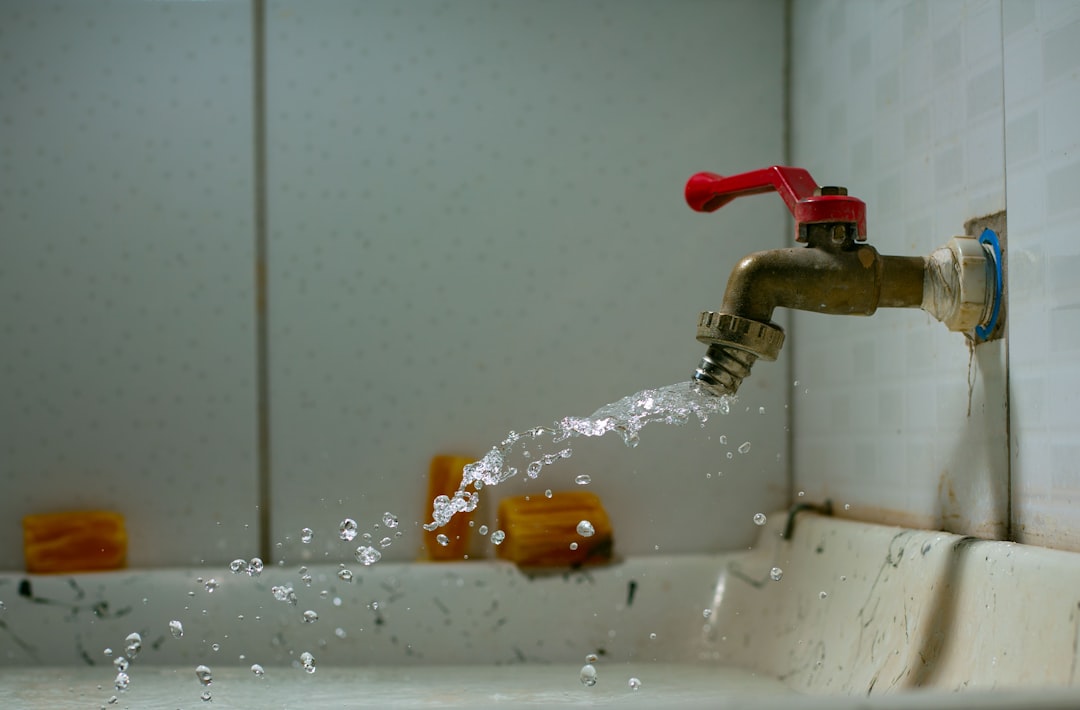
Until the source stops, every other action is partially undone by additional incoming water.
In most Jacksonville homes, the main water shutoff is located one of three places: at the meter near the street (you may need a meter key, available at hardware stores), at an exterior wall where the water service enters the home, or inside a utility closet or garage. Spend ten minutes locating yours now — before you need it — and confirm everyone in the household knows where it is.
Quarter-turn ball valves (newer homes) turn 90 degrees to close — handle perpendicular to the pipe means closed. Older gate valves turn clockwise until they stop. If the valve has not been operated in years, it may be stiff; use steady pressure rather than excessive force.
Individual fixtures (toilets, sinks, water heaters, washing machines) have local shutoffs. If you can identify the burst source quickly, the local shutoff isolates that fixture without affecting the rest of the home. This is faster than running to the main and can stop the water sooner.
Call JEA (Jacksonville’s water utility) — they can shut off service at the meter. This takes longer than doing it yourself but works if the home’s shutoff has failed.
Water and electricity together create immediate safety hazards.
The main electrical panel in the home, typically in a garage, utility closet, or exterior wall. Identify the breakers that serve the affected rooms (panels are usually labeled, though not always accurately) and turn them off. If the affected area is large or unclear, shutting off the main breaker is the conservative choice.
Water that reaches outlets, light fixtures, or appliances creates electrocution risk. CDC and OSHA both publish safety guidance on water-and-electricity hazards. Restoration teams will not enter an area until they can confirm electrical safety; speeding that confirmation accelerates response.
After the area is dry and the restoration team has confirmed no electrical components were damaged. This is typically not the same day as the burst — it may be days into the restoration process before power restoration is appropriate.
Documentation supports the insurance claim and the restoration scope.
Before any cleanup begins, photograph: the burst pipe itself if accessible, the water spread across affected rooms, every wet surface and damaged item, ceilings if the burst is on an upper floor, and the visible water entry pattern. Time-stamped photos from your phone are ideal.
Write down (in a notes app or on paper): when you discovered the burst, when you shut off water, when you shut off power, when you called restoration, who you called. This timeline supports the claim and helps the adjuster understand the response.
If you can identify what caused the burst — a freeze (rare in Northeast Florida but possible in cold snaps), a corroded pipe, a pinhole from age, a manufacturing defect — note that for both the insurance carrier and the plumber who will eventually repair the source. Cause matters for coverage and for preventing recurrence.
While water is still incoming or before it spreads further, take basic mitigation steps.
Get furniture, rugs, electronics, and personal items out of the affected area or up off the floor. Anything you can save from sitting in water is one less item the restoration team has to recover.
Towels at doorways slow water from migrating into unaffected rooms. If the burst is on an upper floor, putting buckets under active drips and towels around fixtures captures incoming water before it spreads to lower floors.
Restoration teams have truck-mounted extractors that pull thousands of gallons per hour. Wet/dry shop vacuums can help with small spills but make a marginal dent in significant burst-pipe water. Mitigate; don’t try to do the whole job.
The earlier the call, the faster the response.
NOAA records show Jacksonville averaging around 75% relative humidity year-round. EPA mold guidance identifies 60% sustained indoor humidity as the activation threshold for microbial growth. Water sitting in your home pushes indoor humidity well above this within hours. Mold establishes within 24-48 hours. Calling restoration the same day the burst happened is the difference between a clean drying job and a combined water-and-mold restoration project.
Where the burst is (room, location in room), approximate water volume, what you have done (water shutoff time, power shutoff status), what materials are affected (carpet, hardwood, drywall), and any access constraints. The more specific the intake, the more accurate the initial response.
Call the insurance carrier as soon as you have initial documentation. The restoration company often works with the carrier directly to coordinate scope, but the homeowner is responsible for opening the claim.
The choices made in the first hour cascade through the entire restoration.
Every minute the water runs adds to the total volume the restoration team has to deal with. A burst pipe shut off in five minutes might release 50-100 gallons; a burst pipe left running for an hour can release 1,000+ gallons. The scope, duration, and cost of restoration scale with the volume.
Water penetrates building materials over time. The first 30 minutes typically wet the surfaces; the next 30 minutes start penetrating the sub-floor and lower wall sections. Shutting off the source quickly limits how much penetrates.
Water reaches electrical components, runs down through ceiling penetrations to lower floors, and migrates through wall cavities over time. Fast shutoff and initial mitigation contain the affected area.
Furniture, contents, hardwood floors, and other items have different salvage windows. Acting quickly keeps more items in the “salvageable” category.
If you can identify the source quickly (visible water at a specific fixture, accessible plumbing in a utility area), shutting off the local valve is faster than going to the main. If the source is not immediately obvious, shut off the main and let the plumber locate it from there.
Typical residential burst pipe restoration runs 5-10 days in Florida — extraction and drying take the first 3-7 days, repairs and finish work continue from there. Larger volumes or more extensive structural impact extend the timeline.
Generally yes. Sudden and accidental water damage from a burst pipe is a standard covered peril under most Florida homeowners policies. Coverage typically includes restoration, repairs, and contents losses. Coverage may exclude or limit damage from gradual leaks or freeze damage if the home was not adequately maintained.
Three patterns are common: corrosion in older copper or steel piping (especially in Riverside, Avondale, and other established neighborhoods), freeze damage during occasional cold snaps where pipes were not insulated or where outdoor hose bibs were not winterized, and manufacturing defects in newer PEX or copper installations. Each cause is handled differently for insurance and repair.
Insulate exposed pipes (attic, exterior walls, crawl space), disconnect outdoor hoses before any forecast freeze, know where your shutoff is, replace aging galvanized or polybutylene piping proactively if your home has it, and address any leaks immediately rather than letting them progress.
A burst pipe in your Jacksonville home is a fast-moving situation that rewards speed and disciplined response. The first hour determines whether you face a routine restoration or a major one. Knowing where your shutoff is before you need it, calling restoration immediately, and documenting everything as you go are habits that pay off significantly when the situation actually arises.
Rainbow Restoration of Deerwood responds to burst pipe events across Southside, Atlantic Beach, and St. Augustine. Our water damage restoration team can be on-site quickly during peak hours and works under IICRC S500 from arrival. When mold has already started from a slow leak that finally burst, the mold remediation team picks up the IICRC S520 work seamlessly.
When the water starts: shut it off, call us, document. In that order. The first hour is the only hour that matters.