

Hardwood floors are one of the most water-vulnerable surfaces in a Jacksonville home and one of the most expensive to replace. When water damage happens — a burst pipe, a refrigerator line failure, a storm intrusion — the decisions made in the first 24-48 hours determine whether the floors recover or have to come out. In Florida humidity, the window is shorter than in drier climates, and the wrong moves can turn a recoverable situation into a full replacement project.
This post walks through how hardwood floors actually respond to water in Northeast Florida conditions, what restoration teams can and cannot save, and what homeowners should do (and not do) in the critical first hours.
In many cases, yes — but only if professional drying begins within 24-48 hours and the water was Category 1 (clean from a sanitary source). Solid hardwood handles water exposure better than engineered hardwood; both fare worse when the moisture penetrates the sub-floor. In Florida humidity, the salvage window is shorter than in drier climates because ambient moisture inhibits drying. Cupping and buckling that appear in the first days do not automatically mean the floor is lost — they often resolve with proper drying.
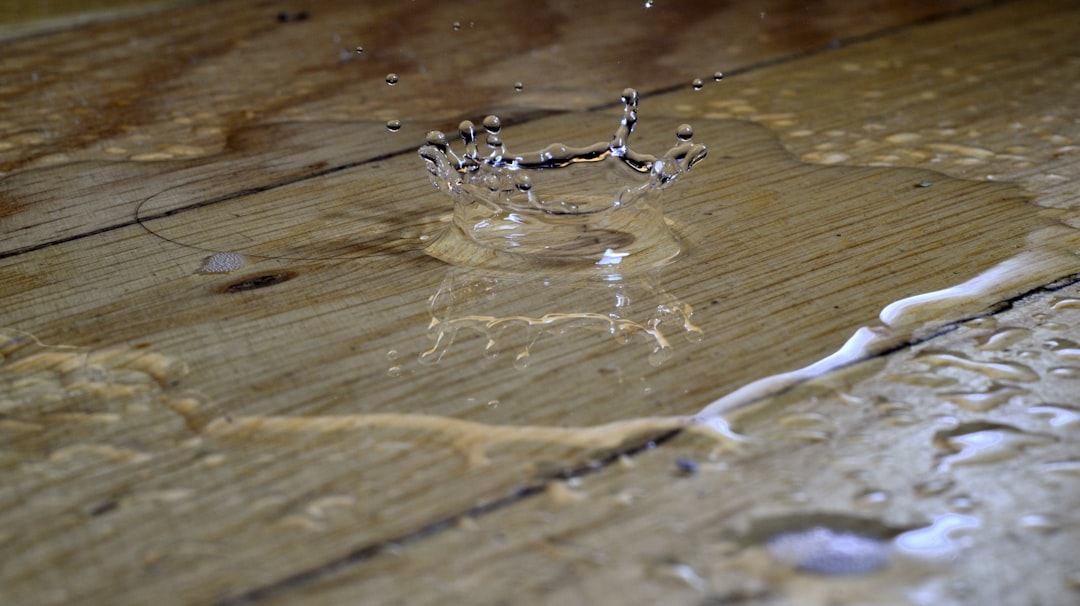
Understanding the substrate behavior helps explain what restoration teams actually do.
Solid hardwood — typically oak, maple, hickory, or pine in Northeast Florida homes — is a continuous piece of wood from top to bottom. It absorbs water primarily through the joints between planks and through the end grain where boards meet. The wood expands as it absorbs moisture, which is why the planks push up against each other (cupping) and sometimes lift entirely (buckling).
Solid hardwood can typically be sanded and refinished after recovery, which gives it a second chance after water damage that engineered floors do not have.
Engineered hardwood has a hardwood veneer (typically 1-4mm thick) over a plywood substrate. The veneer is durable but the plywood underneath swells aggressively when wet and cannot be sanded. Water that penetrates the seams reaches the plywood quickly and causes delamination — the veneer separates from the substrate.
Engineered hardwood that has experienced significant water saturation usually cannot be saved through drying alone.
Often mistaken for hardwood. Laminate is a printed image over a fiberboard core; luxury vinyl is plastic with a printed surface. Both float over the sub-floor without adhesion. Water that gets under either typically pools and stays, leading to mold growth on the sub-floor below. These products are not salvageable through drying — they require removal and replacement.
The behavior of hardwood under water exposure follows a predictable timeline that determines the restoration approach.
Visible water sits on the floor surface and starts entering the joints between planks. End grain at plank boundaries absorbs first. The floor looks wet but normal.
Planks begin cupping — the edges rising as the wood absorbs moisture and expands. The floor feels uneven underfoot. This is the substrate telling you it is taking on water.
If water continues sitting and the floor cannot release it, planks can buckle — separating from the sub-floor and rising visibly. Buckling typically indicates significant water penetration to the sub-floor as well as the floor planks.
Water that reaches the sub-floor begins affecting the structural substrate. Plywood absorbs and starts to delaminate; OSB swells and loses dimensional stability. The mold growth window starts. EPA mold guidance identifies 24-48 hours as the activation window — Florida humidity puts it at the short end of that range.
The IICRC S500 standard specifies the structural drying approach.
Truck-mounted extraction removes visible water from floor surfaces, including water trapped in joints between planks. Specialized hardwood extraction tools have narrow extraction heads that pull water from board seams.
Specialized hardwood drying mats are placed on the floor surface and connected to dehumidification equipment. The mats create negative pressure across the floor that pulls moisture out of the planks and sub-floor below. This equipment is significantly more effective than ambient air movement alone, especially in Florida humidity where ambient drying is limited.
If water reached the sub-floor — usually evident through moisture meter readings or visible cupping — the sub-floor needs to dry as well. Sometimes this requires removing a portion of the hardwood to access the sub-floor directly. The IICRC dry standard for plywood sub-flooring is typically 12-16% moisture content; for solid hardwood, the target depends on the species but generally 6-9% to match equilibrium moisture content for indoor Florida conditions.
Pin moisture meters take daily readings to track drying progress. The job continues until target moisture content is reached at multiple measurement points on both the floor and sub-floor. Florida jobs typically run 5-10 days for full drying of hardwood floors with significant water exposure.
After drying, the team assesses whether the floors need refinishing. Slight cupping that resolves during drying often leaves the floor in acceptable condition. Persistent cupping, surface damage, or finish discoloration may warrant sanding and refinishing. This assessment is part of the final inspection.
Sometimes drying is not enough.
Floors that sat in water for more than 72 hours, especially in Florida humidity, typically cannot be dried back to acceptable condition. The wood has absorbed too much moisture, dimensional changes are permanent, and the sub-floor has begun deteriorating below.
Hardwood floors that contacted Category 2 (gray water) or Category 3 (sewage, storm surge) water typically require removal regardless of how recently the event occurred. The contamination cannot be effectively cleaned from the porous wood substrate.
Floors with already-deteriorated finishes have less moisture protection from the start. Water penetrates faster and the finish damage compounds whatever water damage occurred. The restoration team factors this into the salvage decision.
When engineered floors show signs of veneer delamination, the assembly has structurally failed. The veneer cannot be reattached effectively and the floor needs replacement.
Towels, mops, wet/dry vacs — anything to remove standing water from the floor surface. The longer water sits, the more penetration occurs.
Florida humidity makes time-to-response critical. The earlier professional drying starts, the higher the salvage probability.
Photographs of the floor condition before any work begins, the water source, the affected area extent. This supports the insurance claim and the salvage decision.
Fans alone in Florida usually make things worse by accelerating evaporation without removing moisture from the air. The evaporated water re-deposits elsewhere and the drying extends rather than completes.
Some homeowners think running a space heater or turning up the thermostat helps. In a wet hardwood situation, applied heat can accelerate cupping into buckling and lock damage in. Restoration teams use heat strategically with appropriate dehumidification — not as a DIY measure.
Wet hardwood is structurally compromised. Walking on it accelerates damage and can cause irreversible buckling. Block off the affected area and stay off until the restoration team assesses.
Visual inspection of the cupping pattern, moisture meter readings on planks and sub-floor, and assessment by an experienced restoration professional. Floors with light cupping and short water exposure typically save with proper drying. Floors with severe buckling or sub-floor damage usually cannot.
Standard Florida homeowners insurance covers hardwood floor damage from covered water losses. Coverage typically includes drying, refinishing if needed, and replacement if drying fails. Documentation of the event, the cause, and the restoration scope supports the claim.
Typical drying for hardwood floors with significant water exposure runs 5-10 days in Florida. Faster in winter when humidity is lower; longer in summer when ambient conditions slow drying. Daily moisture monitoring determines when the job is complete.
Light cupping that resolves during drying may require minor refinishing for finish recovery. More severe cupping that resolves but leaves residual texture may require sanding to a smooth surface and complete refinishing. Cupping that does not resolve usually means the floor cannot be saved through refinishing.
Depends on the cause. For one-time events from interior plumbing or appliance failures, replacing in kind is often appropriate. For recurring water exposure or coastal humidity issues, considering water-resistant alternatives (porcelain plank tile, luxury vinyl plank rated for wet areas) may make sense. Discuss options with both the restoration team and a flooring contractor.
Hardwood floors can survive water damage in Jacksonville more often than homeowners expect — but only if the response starts within hours and uses equipment built for the job. DIY drying with fans almost always fails in Florida humidity. Professional structural drying under IICRC S500 has a strong track record of saving floors that look unrecoverable in the first 48 hours.
Rainbow Restoration of Deerwood handles hardwood floor water damage across Southside, Atlantic Beach, and St. Augustine. Our water damage restoration team uses hardwood-specific drying equipment under IICRC S500 protocols, and the mold remediation team is available if sub-floor moisture led to colonization before drying started.
After water hits hardwood: extract, document, call quickly. The first day decides what the next month looks like.