A burst supply line, a failed water heater or an overflowing AC condensate line can put a lot of water on the floor in a short time. What you do in the first hour makes a real difference to how much has to be removed later.
What to do right now
- Stop the source. Shut off the water at the main valve. If you do not know where it is, look near the water heater, in the garage or where the line enters the house.
- Turn off power to wet areas if you can reach the breaker without standing in water. If you can’t, stay out of the room.
- Don’t walk under wet ceilings. A ceiling holding water can come down without warning.
- Move valuables out of the water: electronics, documents, photos and rugs.
- Don’t use a household vacuum on standing water. It is not built for it and it is a shock risk.
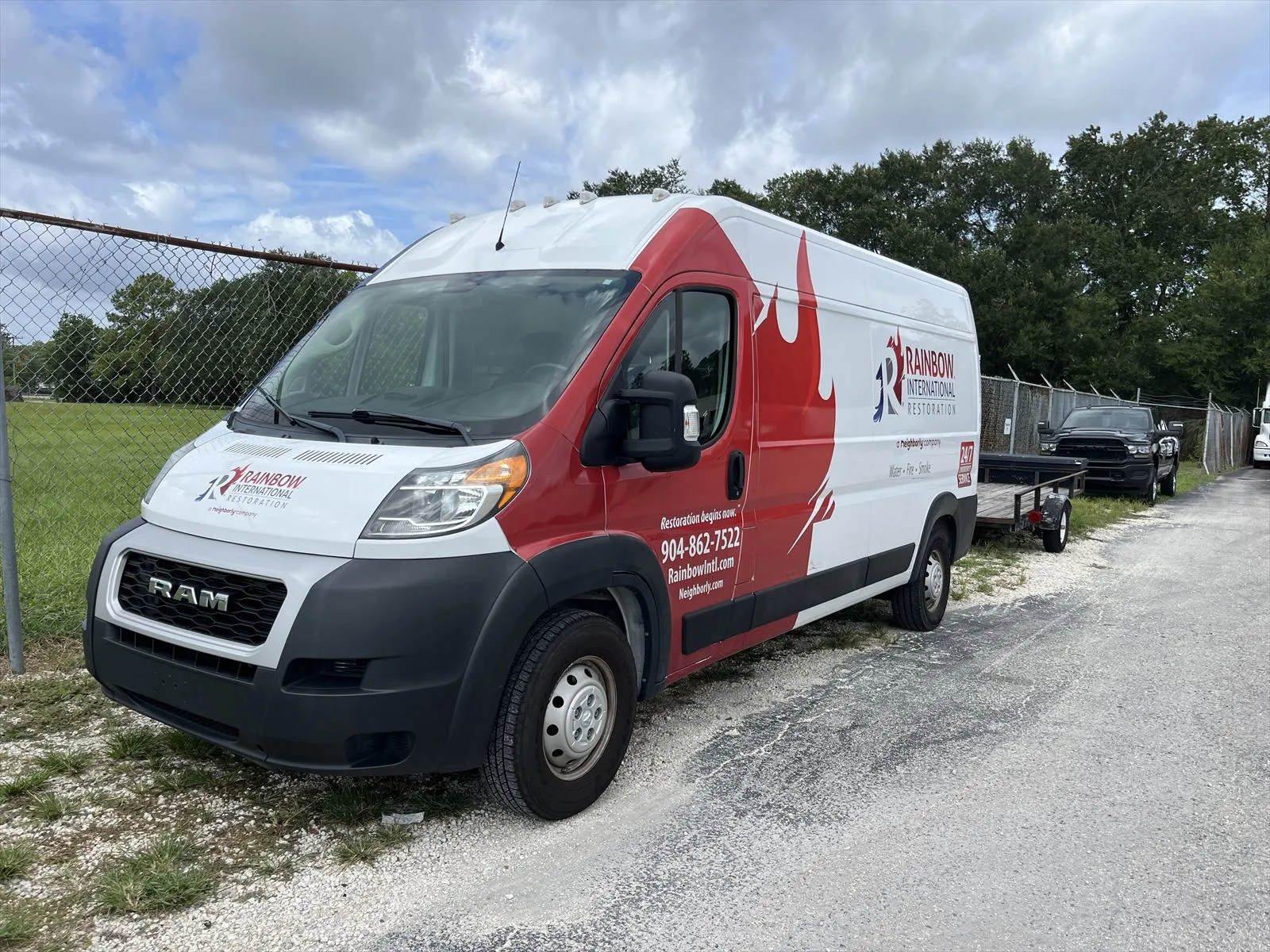
- Call a restoration company. A person answers every call to Rainbow Restoration of Deerwood, 24/7.
Why every hour counts in Northeast Florida
Water does not stay where you see it. It wicks up drywall, runs under baseboards and soaks into cabinet bases and subfloors within hours. In our heat and humidity, those materials will not dry on their own, and mold can begin within 24 to 48 hours.
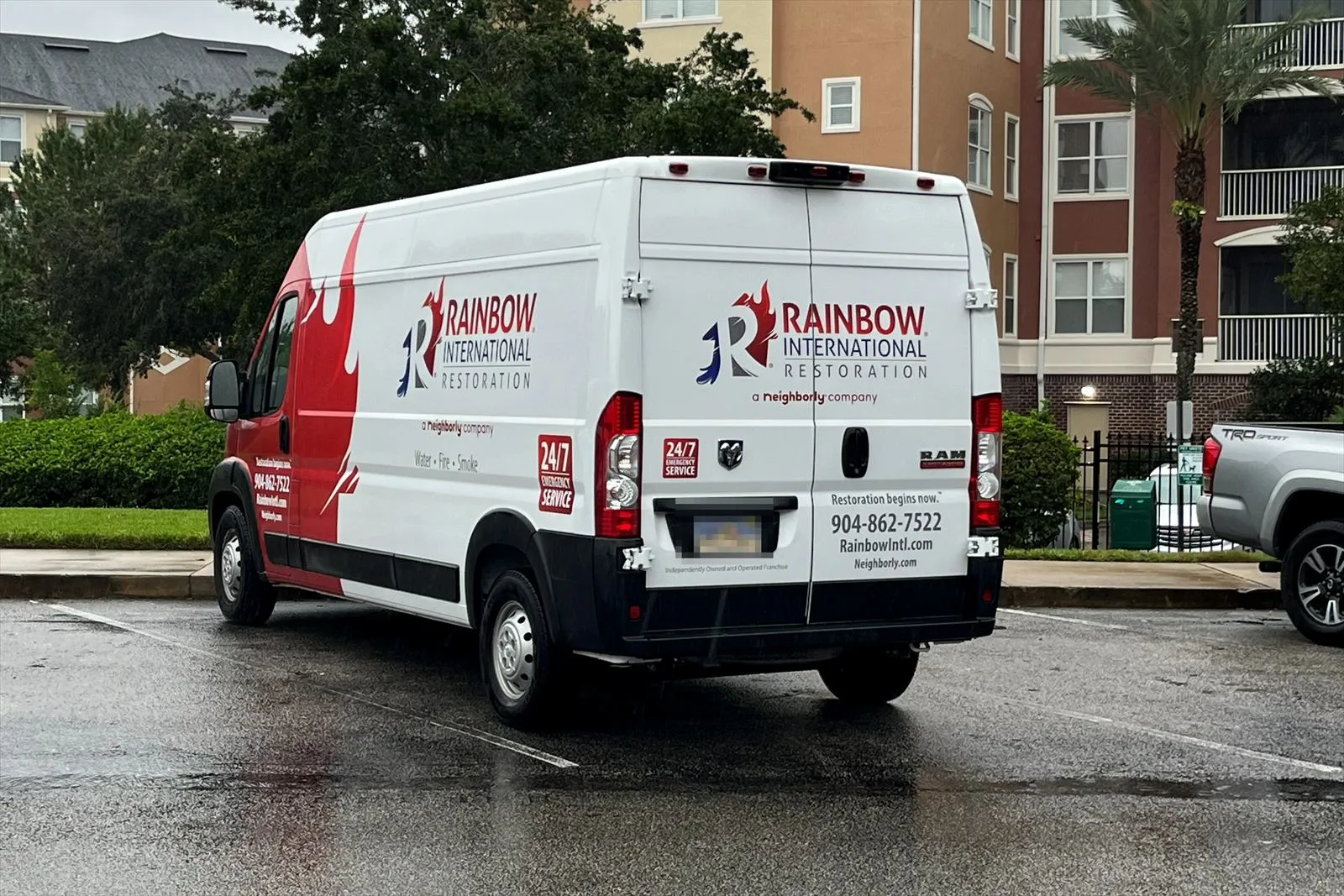
Faster extraction means less to remove and a smaller claim. That is why, for a water emergency, our crew is dispatched within 1 hour of your call.
What a restoration crew does
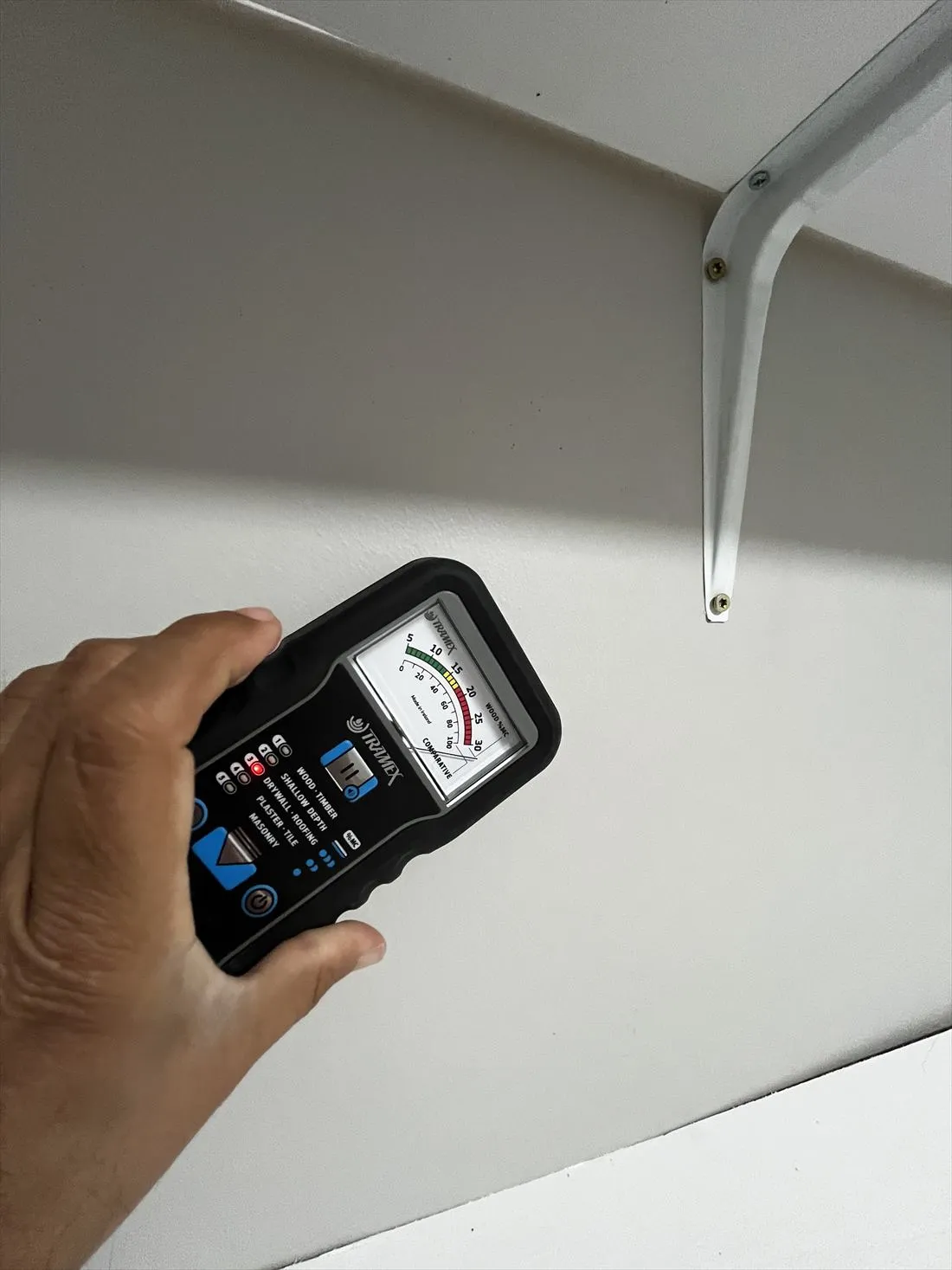
- Finds the moisture. Moisture meters and thermal imaging show where the water went, including inside walls and under floors.
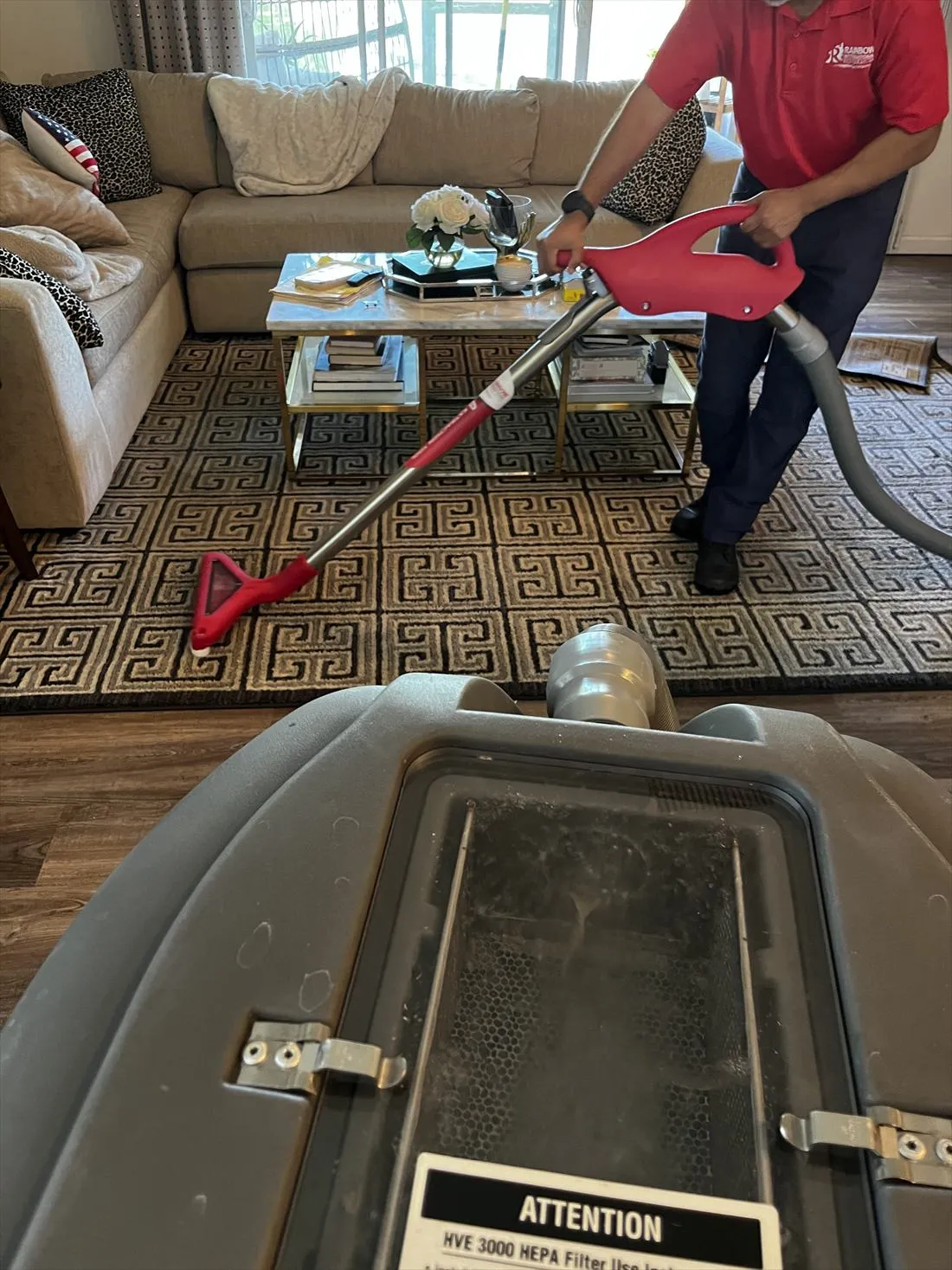
- Extracts standing water from floors, carpet and pads.
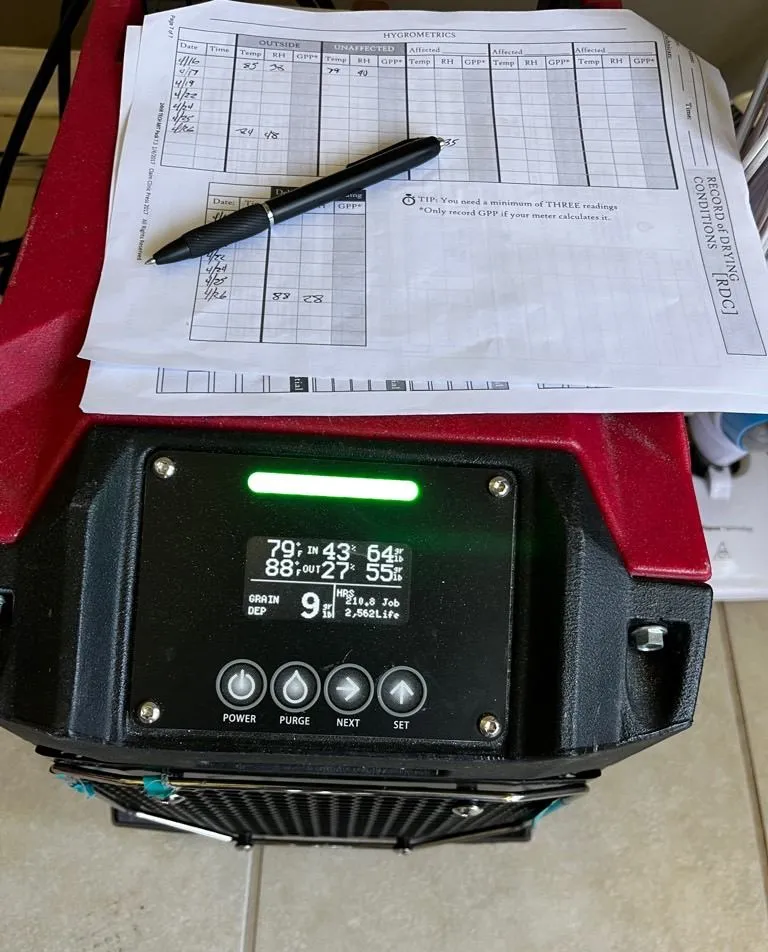
- Sets drying equipment: dehumidifiers and air movers placed for the rooms and materials involved.
- Takes daily readings and keeps a drying log until the structure reaches dry standard.
- Documents everything with photos and moisture logs for your insurance claim.
Clean water, gray water and black water
The source of the water changes the work. Water from a supply line is clean when it starts, but it does not stay clean for long. Water from a washing machine or dishwasher carries soap and food. Water from a sewer backup or rising flood water carries contaminants, and wet materials it touches usually have to be removed rather than dried. Tell the person who answers where the water came from.
How the insurance claim works
Your carrier decides coverage based on your policy and the cause. In general, sudden and accidental water, like a burst pipe, is treated differently from slow leaks and from rising flood water, which needs separate flood insurance.
We bill your insurance directly. You are copied on everything we send your adjuster, and if anything could mean an out-of-pocket cost, we tell you right away. For emergency water mitigation, there is no surprise bill: the cap is in writing.
If a claim isn’t the right route, ask about financing.
When to call
Call as soon as the water is stopped. The sooner drying starts, the less has to come out. Read more about our water damage restoration service, or call (904) 862-7522.